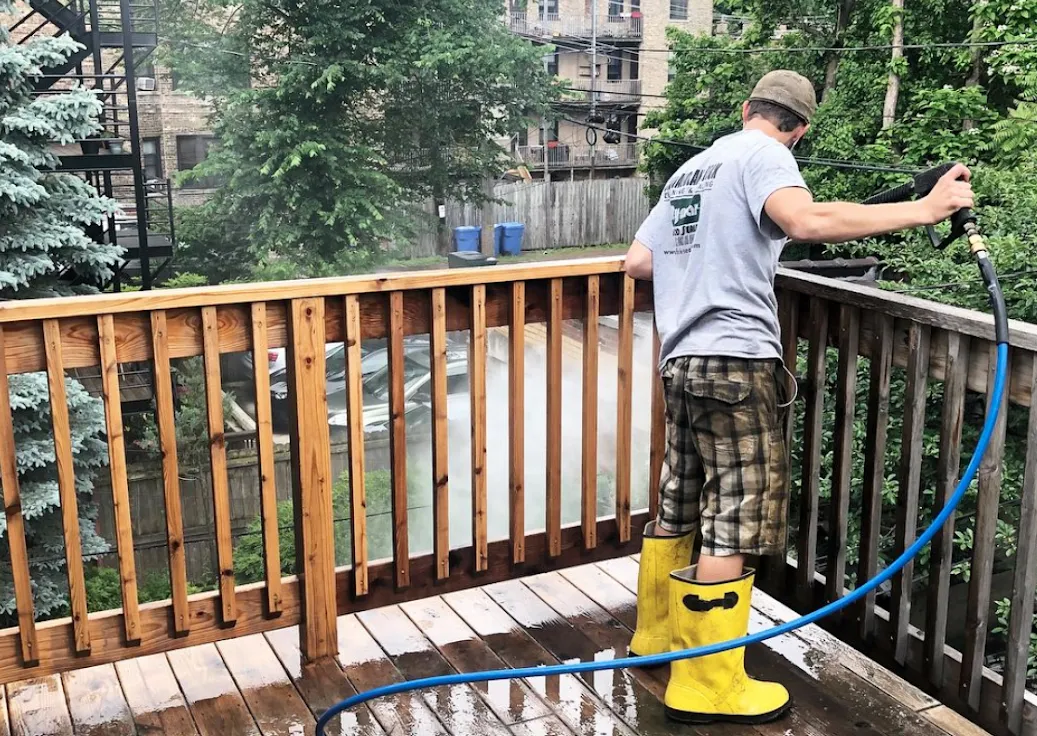
Chicago Deck Power Washing: When It Helps—and When It Can Damage Your Deck
Power washing a deck sounds simple. Spray it down, wash off the grime, and your deck looks brand new.
Sometimes that works. Sometimes it does the exact opposite.
Deck power washing can be one of the best ways to restore the look of your deck and prepare it for sealing or staining. But too much pressure or the wrong technique can actually damage the wood.
In a climate like ours, where decks deal with snow, humidity, and summer sun, cleaning the right way matters. Homeowners in places like Park Ridge, Niles, and Evanston often see their decks turn gray or slippery after just a few seasons. That’s where proper deck cleaning comes in.
When Power Washing Actually Helps
Deck power washing is useful when your deck has built-up grime, mildew, or old stain that needs to
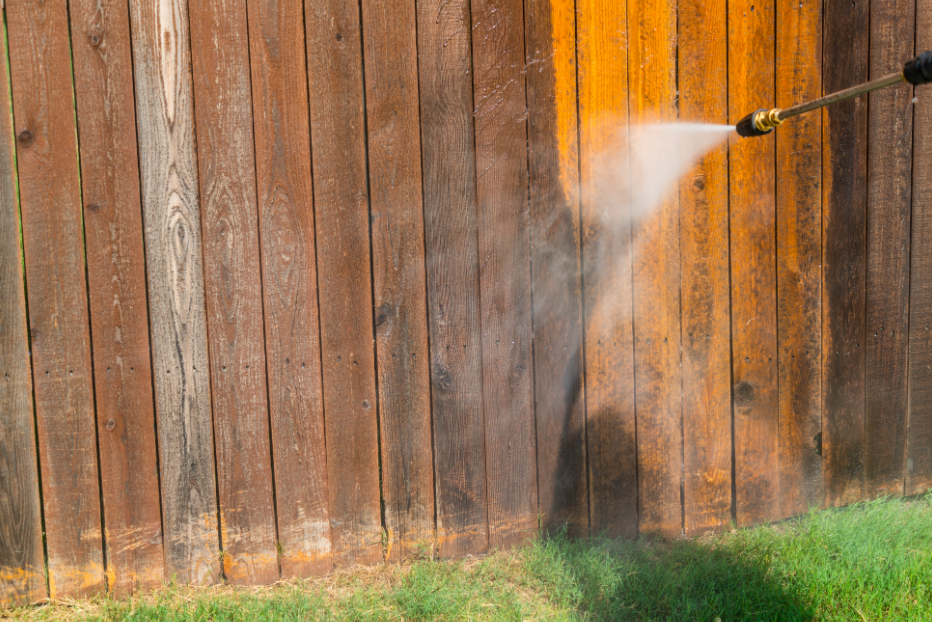
come off.
Over time, Chicago decks collect:
Mold and mildew from humidity
Algae that makes boards slippery
Dirt and pollution from city air
Failing stain or sealant
A controlled wash removes that buildup and helps bring the wood closer to its natural color.
Cleaning is also the first step before deck sealing or deck staining in Chicago. Sealers need clean wood to penetrate properly. If dirt or mildew is still there, the new coating won’t last very long.
Homes in shaded areas like Skokie or Morton Grove often need cleaning more often because moisture sticks around longer.
When Power Washing Can Damage Your Deck
Here’s the part people don’t always realize.
Too much pressure can tear up the wood.
Many rental pressure washers run over 2,500 PSI, which is more than most wood decks can handle safely. When pressure is too high or the nozzle is held too close, the water actually rips apart the wood fibers.
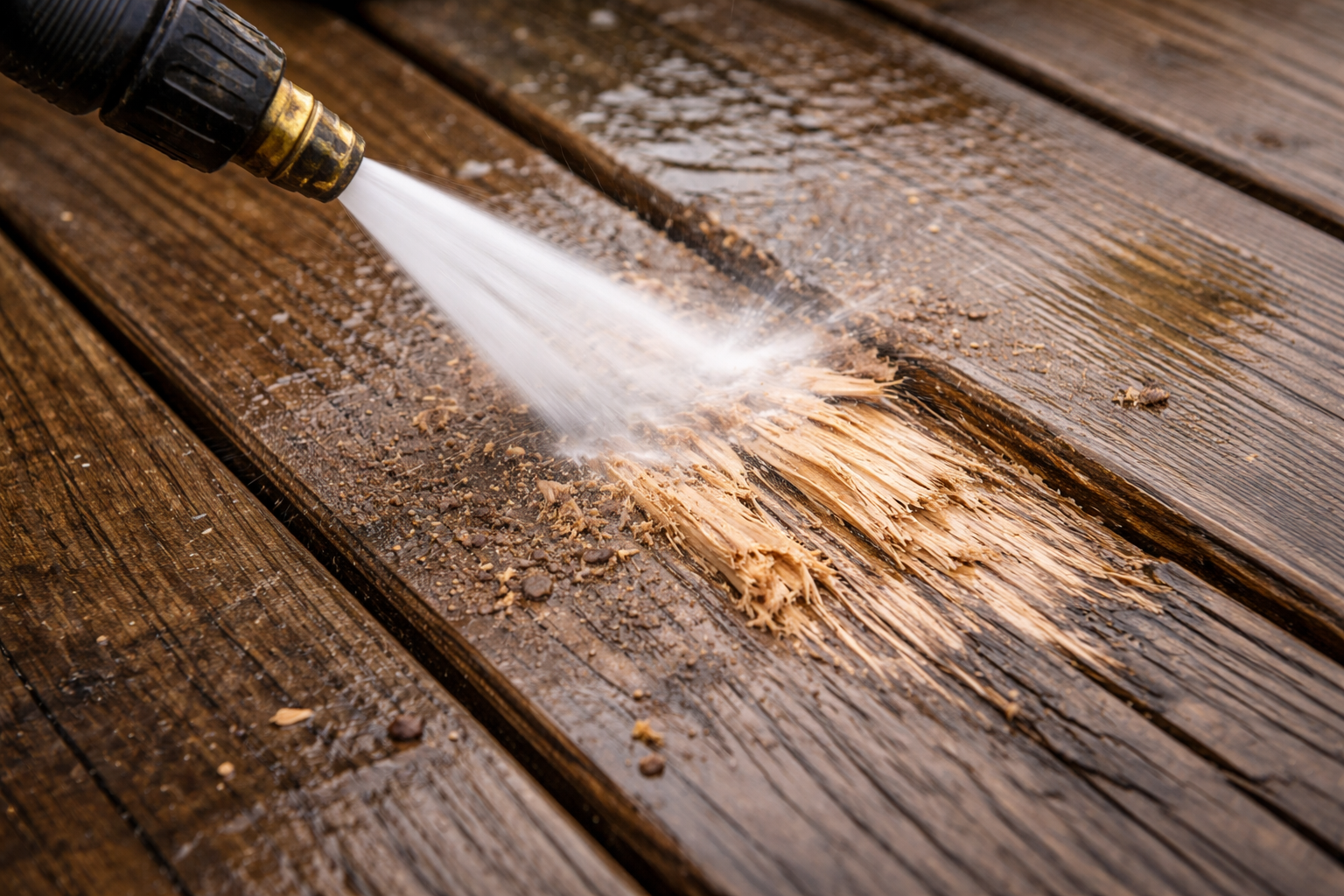
You might notice:
Rough or fuzzy boards
Deep grooves in the wood
Splintering
Uneven cleaning marks
Once the wood fibers are damaged, they absorb moisture faster and the deck wears out sooner.
We see this pretty often on decks around Des Plaines, Lincolnwood, and Oak Park where DIY pressure washing went a little too aggressive.
The Right Way to Clean a Deck
Good deck cleaning is more about control than power.
Professionals usually use lower pressure along with specialized cleaners that remove mildew and grime without damaging the wood. The goal is to clean the deck evenly while keeping the surface smooth.
After cleaning, sealing the deck is just as important.
At Chicagoland Deck Cleaning & Sealing, we use Rymar wood sealer, which penetrates deeply into the wood and holds up well against Chicago’s freeze-thaw cycles and moisture. A good sealer protects the wood while still letting it breathe, which helps prevent peeling later.
If you want to understand the timing for this, our guide on How Often Should You Clean and Seal Your Deck in Chicago explains the best maintenance schedule for local decks.
Signs Your Deck Needs Cleaning
You don’t have to wait until your deck looks terrible.
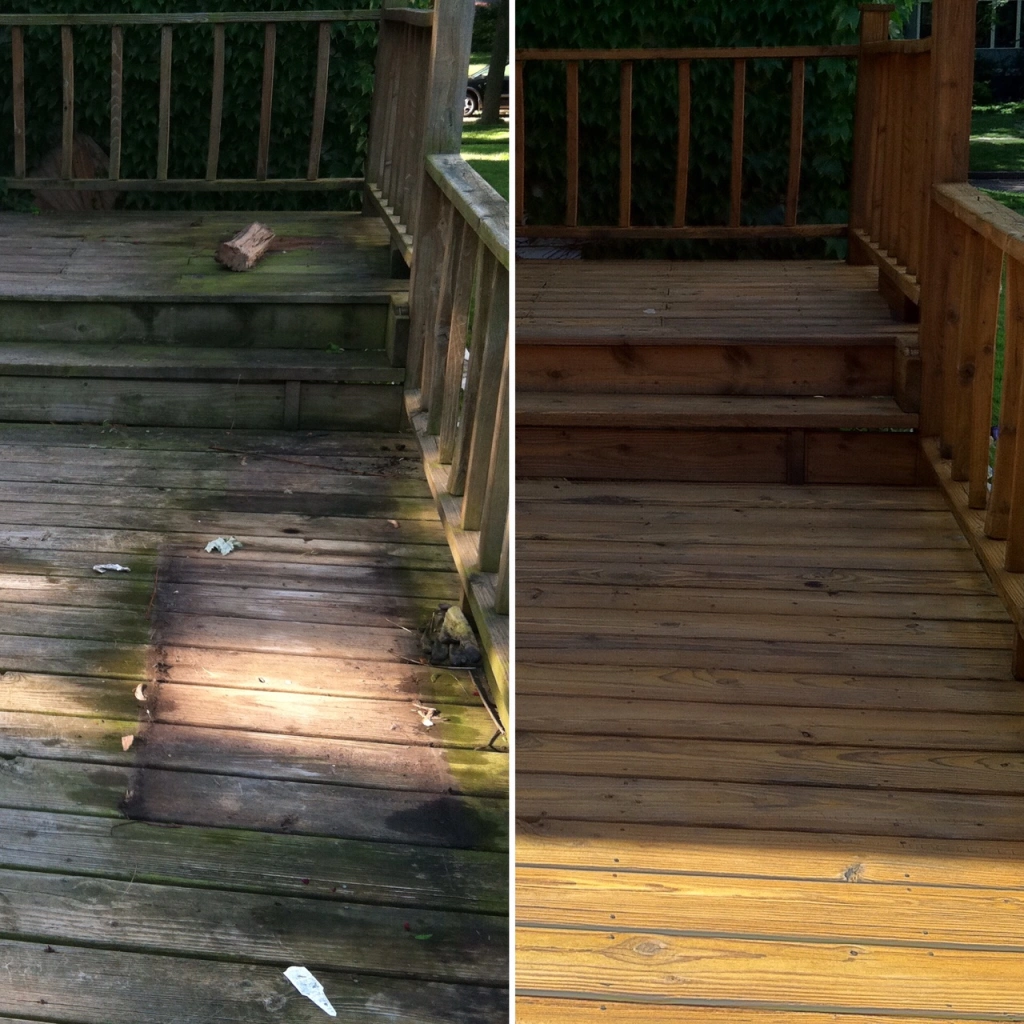
Common signs include:
Gray or faded boards
Slippery surface when wet
Green or black staining
Dirt that won’t sweep off
Homeowners across Chicago often notice these signs after winter when snow melt and spring rain leave moisture behind.
A simple annual cleaning can keep these problems from building up.
Final Thoughts
Deck power washing can make a big difference when it’s done correctly. It removes grime, mildew, and old residue so your deck looks better and stays safer.
But too much pressure can do real damage.
The key is using the right method and following cleaning with proper deck sealing in Chicago so the wood stays protected from moisture and weather.
If your deck is looking worn or slippery, Chicagoland Deck Cleaning & Sealing can safely clean it and apply long-lasting protection so it holds up through Chicago’s tough seasons.
FAQ
How often should I power wash my deck in Chicago?
Most decks benefit from professional cleaning once per year.
Is power washing safe for wood decks?
Yes, but only with the correct pressure and technique.
Should I seal my deck after power washing?
Yes. Cleaning opens the wood pores, so sealing protects it from moisture.
